


Many solar system owners in Sri Lanka, especially those connected to the grid, find it confusing to interpret their electricity bills. A common misconception is that the electricity bill reflects the total energy generated by their solar system. However, this isn’t the case.
In this article, we’ll explain what your electricity meter actually measures and how to understand your solar system’s real performance.
What Your Electricity Meter Records
Your electricity meter records two key values:
- Imported Energy: This is the electricity you consume from the national grid.
- Exported Energy: This is the surplus electricity from your solar system that is sent to the grid.
Important: Your total solar energy generation isn’t fully visible on your electricity bill.
Why Your Inverter Production Doesn’t Match the Bill
Let’s look at a typical example:
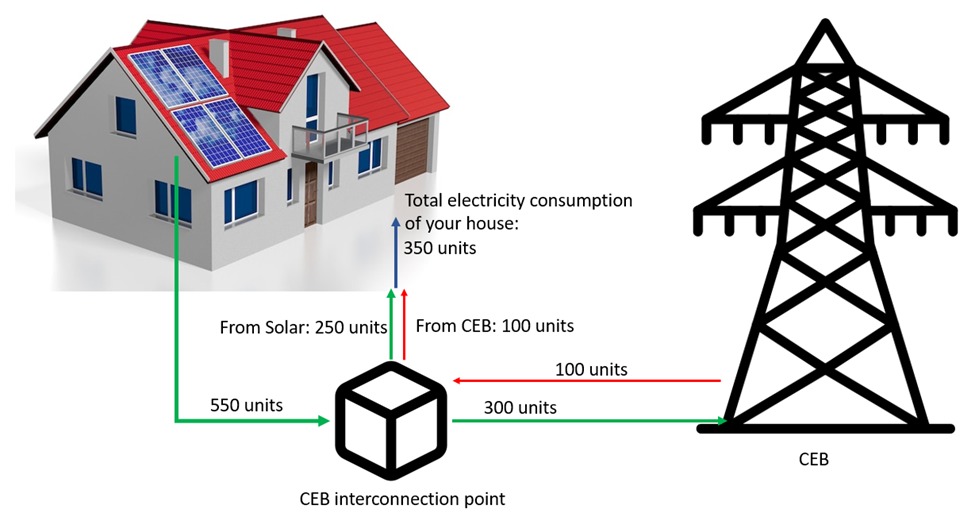
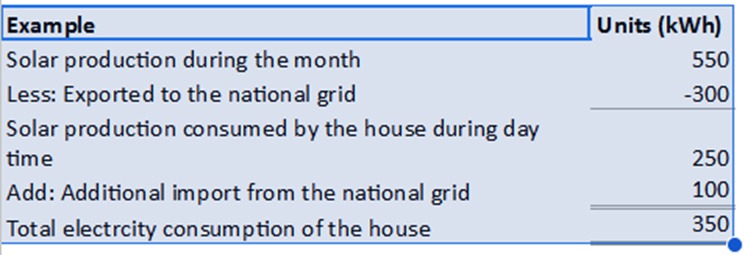
- Your solar system produces 550 kWh during a given month (this is the 30-day reading you get from your remote monitoring app).
- Your electricity bill shows:
- 300 kWh exported to the grid.
- 100 kWh imported from the grid.
This often raises a common question: “If I generated 550 kWh, why did only 300 kWh appear on the bill as exported?”
Here’s what actually happened:
- Out of the 550 kWh your solar system generated, 250 kWh was used directly by your home during the daytime (this is known as self-consumption).
- The remaining 300 kWh was surplus and exported to the grid.
- You imported 100 kWh from the national grid. This covers your nighttime consumption (when the solar system isn’t operating) and/or periods when solar production wasn’t sufficient to meet your daytime needs.
Understanding Your Energy Flow
Here’s a summary of the energy flow:
A graphical representation of the same: